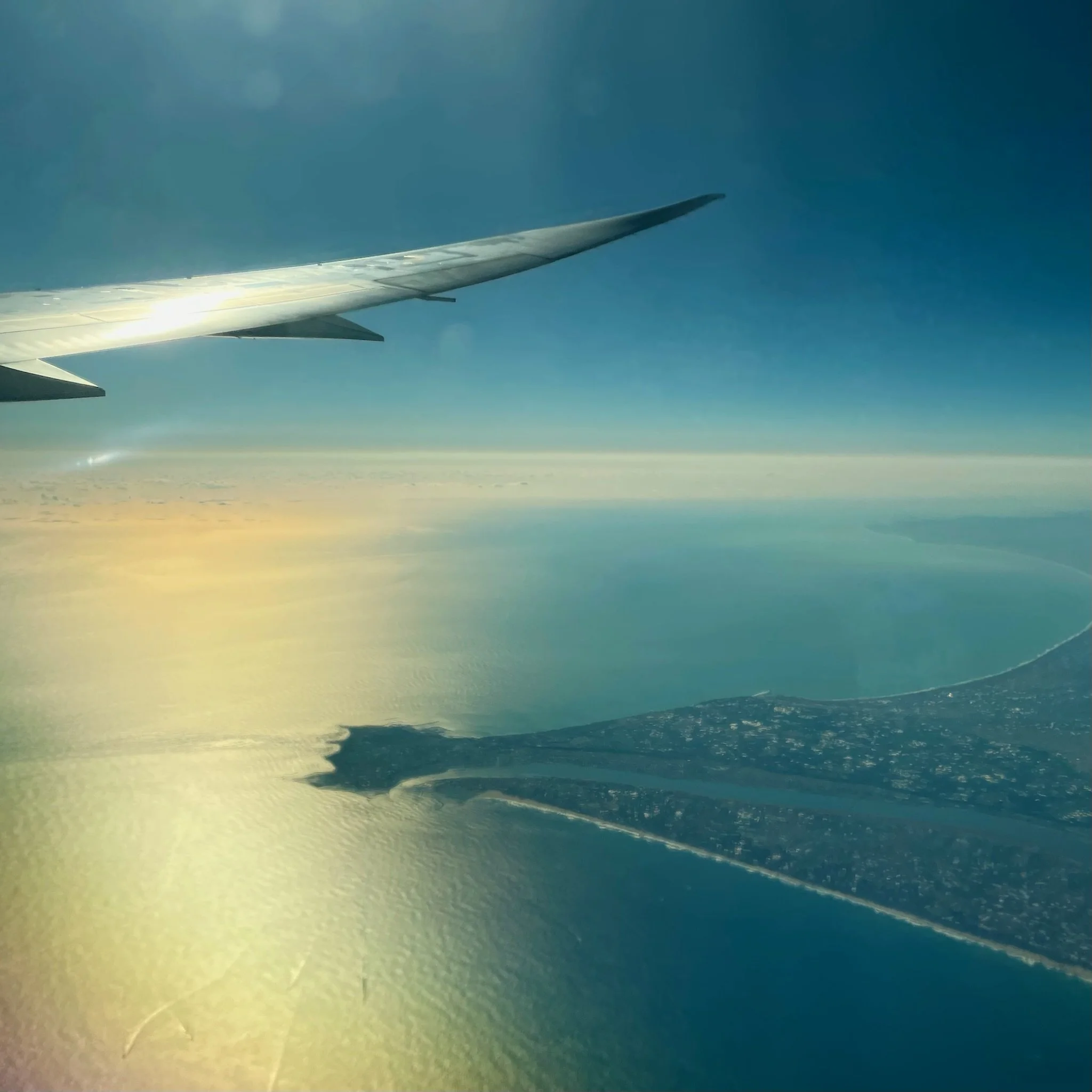
Headed home. Photo credit: Barbara Raimondo
And just like that 7 weeks pass and early one morning you find yourself on the Tokyo subway headed to the Haneda Airport. The line for security wraps around the terminal, but because this is Japan it takes less than 30 minutes to go through passport control, check luggage, and go through security, allowing plenty of time for a coffee and a bun in the airport lounge.
A quick nap on the plane and you step out into the arrivals area at Dulles airport, where, because this is the United States, you spend the next two hours creeping toward one of just five border agents serving four plane loads of passengers. Upon reaching him, he languidly inquires if you have any plants or more than $10,000 in negotiable instruments and, upon hearing the negative, waves you through.
After Japan, public transportation in the United State seems decrepit and filthy. The metro is single tracking between West and East Falls Church Stations (because of course it is) and the bus stop at Shady Grove Station is strewn with litter and unsavory characters. Still, we don’t wait long for a bus and a few minutes later we are walking the final 500 meters from the bus stop to home. Arriving, we observe that we have traveled from home to all over Japan and back again having only used public transportation. No Ubers, no cabs, no private vehicles. It feels like a little victory.
It is strange to be home. Adding to the disorientation is the fact that we left Japan at 10:15 on Sunday morning and arrived in Washington at 9:15 Sunday morning, thanks to a transit of the international date line.
Once the water and the cooking gas are turned back on, it soon feels like we never left. There is the mail to retrieve, bills to pay, and the larder to restock — the ordinariness of life comes rushing back.
People ask, “How was your trip? Tell me about it!” But where do you start to talk with a trip of seven weeks? So I usually say, “It was great!” and am rarely pressed for more details. One’s journey is one’s own. No one is really interested, to be honest.
So much of the experience was just the day-to-day living. Going to the grocery store. Riding the trains. Navigating the subway and buses. The quiet of the woods of a mountain hike. An unexpected glimpse of the full moon of Kislev rising over the lake. But there are a few things that stand out and that I will probably remember for longer than say, where I left my keys.
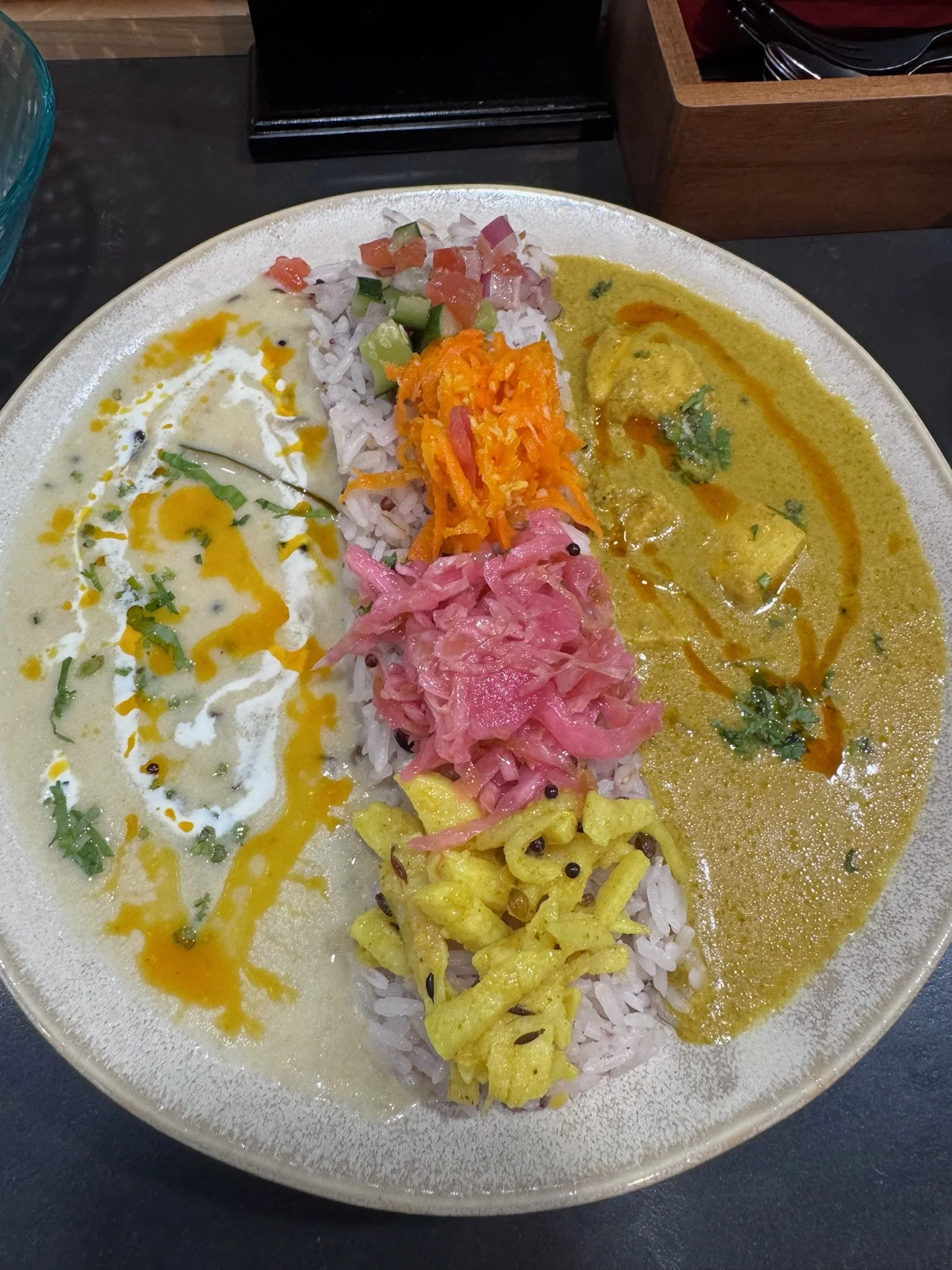
A beautiful fish and veg curry in Nagano.
We had a simple and beautiful meal at a curry restaurant in Nagano. It was a one man show with the owner and cook preparing and serving our dish while we sat in front of him at the counter at the tiny establishment. The place had seats for perhaps 12 people, and the food was simple and delicious with a fresh baked naan that he made for our order.
We biked a route called the Shimanami Kaido. An island to island ride that takes one over stunning bridges. We stopped at a 7 Eleven for a snack and I left my iPhone sitting on a bench. When I noticed it was gone and biked back for it, this being Japan, it was still sitting right outside the store where I had left it half an hour earlier. The day culminated with a visit to a colorful ancient temple above which was a massive, modern creation made out of Carrara marble imported from Italy and made by an Italian sculptor.
We signed up for a bicycle tour of Fukuoka and turned out to be the only participants. Harata, the delightful young man who led the tour, took us to beautiful spots we wouldn’t have seen on our own including a quiet Buddhist temple with a magical courtyard that included an honest to God golden calf. Rub its head for good fortune. The courtyard was empty and silent in this teeming city.
In the same town, we waited at a bus stop while a Sumo wrestler in his robes and sandals waited with us. The annual tournament was being held in this city and, as we learned, the wrestlers are required by tradition to wear their thin robes at all times, even while waiting for a bus in the cold, winter wind.
One day in Sapporo we stayed in our hotel room all day while the rain and wind whipped the city streets. We ate breakfast at the hotel buffet and worked on our blogs until evening when we ventured out and found a sushi restaurant where the staff was super friendly and the fish was delicious and fresh. When you spend seven weeks in a place, you can take a day off and just chill.
On a train platform in Kanazawa, we ran into three couples that we knew from home. Their kids grew up with ours. They were getting off the train and we were getting on. It was surreal.
A lovely Japanese garden where they pumped in fake fog once an hour so that visitors can take magical photos.
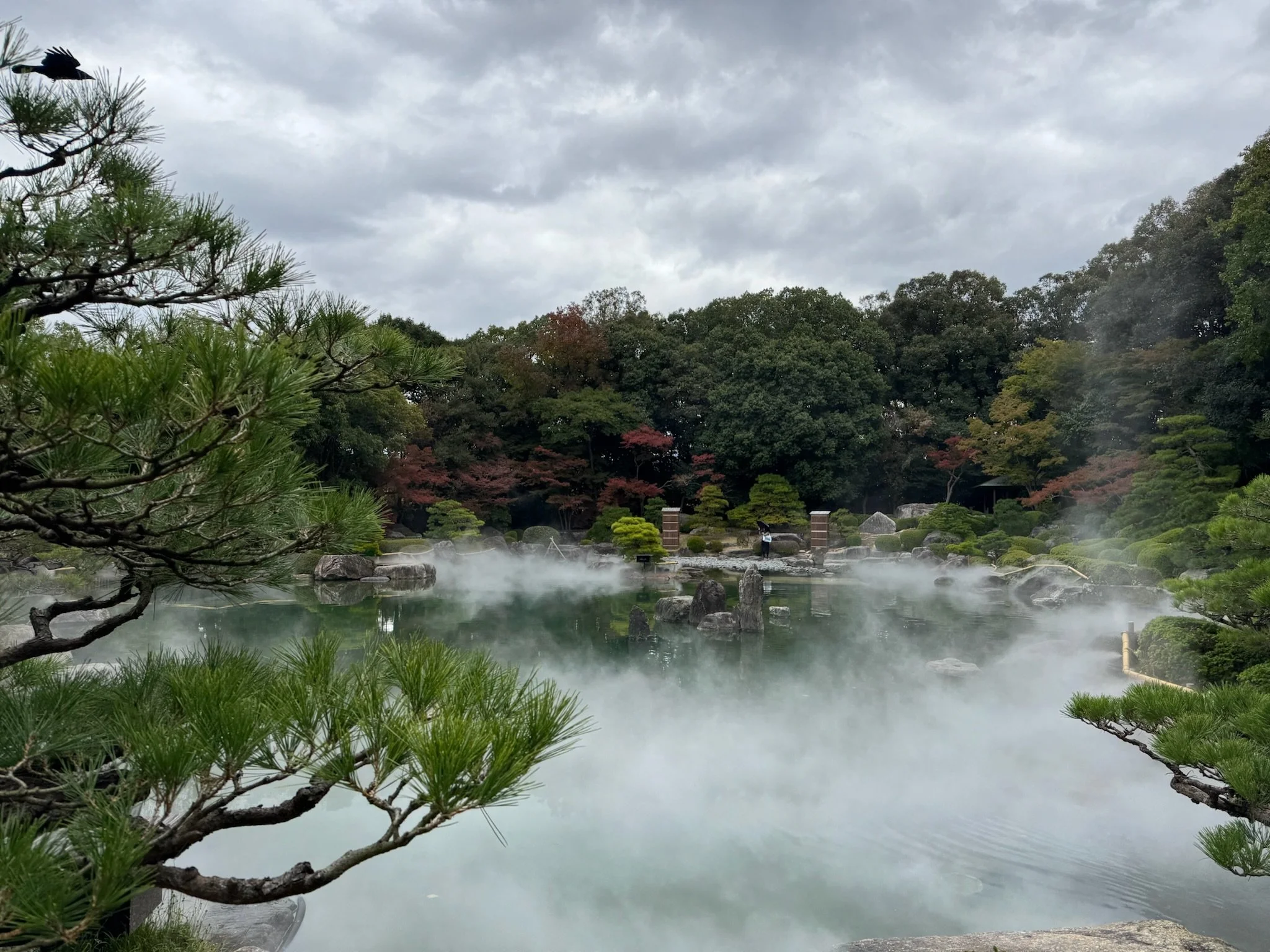
Fake fog for your photographic pleasure.
Everyone, everywhere bows. The man directing traffic. The conductor on the train. The cashier at the grocery store. The hotel clerks. It is as if to say, “I see the image of God in you.” It feels affirming to receive a bow and to bow back, and it happens dozens if not hundreds of times a day.
Before we left home, I wrote a post in which I confessed that I didn’t really like to travel but that I felt it was good for me. Like fish we are oblivious to the water we swim in until we are out of it for a while. Unlike fish, however, we can adapt to other atmospheres. I adapted to life on the road, even enjoyed it and never wanted for anything beyond the 10kg of kit I’d brought with me. Except for, well, maybe another English language book after I finished “Slow Horses.” English books were hard to come by in Japan.
By the time we were heading home, it felt that I at least had a sense of what it might be like to live in Japan. Some of the most notable things were not what we saw but what we rarely or never saw.
You virtually never see:
Litter
Someone talking on their cell phone while walking
People smoking in public
A dirty car
Something broken
Graffiti
A train running late
People behaving inconsiderately or rudely
Dog poop
Stray cats
Traffic jams
People walking and eating
Homeless people or people asking for money
Tattoos
Men with beards
Benches to sit upon
A public park, train station, or convenience store without an immaculate toilet that is free to use.
Things are just messier in the United States. And don’t get me wrong, messiness can have its charm, but it is irritating too. Wondering if your bus will show up, trying to find a public toilet before you burst, wondering if your bike will still be there when you get back. Japan removes all these worries and abrasions and replaces them all with a single anxiety: “Am I bothering anyone?”
But in spite of its messiness and other abrasions, my life, my friends, my family are here. Those things exert a force like gravity that holds one in place. One may visit the International Space Station from time to time but as pleasant as it may be to float weightless one must return to earth and stay a while before ones muscles start to atrophy.
Ok, that’s long enough. When’s the next rocket out of here?
The world’s a narrow bridge; fear nothing.