Poetry
Polymathy
Platings
Merch
About
Contact

Clattering East

Poetry & Polymathy from the Baby Boom's Rear Flank
Poetry
Polymathy
Platings
Merch
About
Contact
“The journey itself is my home.”
— Matsuo Bashō (1644-1694)

Shinkansen!

I first heard about Japan’s super fast “bullet trains” some time in the mid-1960s. I think there was a documentary on PBS about their construction. As a young boy I was fascinated by trains of any kind, and the faster the better. It would be more than 50 years, however, before I would step on board on and take a ride. It happened this week.

The online booking system for the Japanese Railway system, JR, is a bit complicated — all the more so because there are multiple lines in Japan and each is owned by a different company. If you are in Tokyo and want to go to Kyoto, you’d use a certain website to book your seat. If you want to go to Sapporo on the island of Hokkaido in the north, it’s a different website.

Sitting at home, trying to book a ticket for a railway I had never seen was even more daunting. But eventually, I figured it out and booked two tickets from Tokyo to Hakodate where the line ends, and then two more from Hakodate to Sapporo. There didn’t seem to be a way book a ticket all the way through. That was fine however. It is a pretty long journey all the way to Sapporo, around 9 hours, so it seemed sensible to break it up and stay overnight in Hakodate at the very southern tip of Hokkaido.

I also managed to link our tickets to our transit cards on our Apple Watches so that we’d be able to just tap into the fare gate and tap out again. No paper tickets needed.

It was just 3 stops on the subway from our hotel in Kinshichō to Tokyo Station. We allowed plenty of time but it was rush hour. Perhaps you have seen or heard stories of the Tokyo metro at rush hour? Yes, just like that. We (and our backpacks) were crammed like the proverbial sardines into the car. No need to hold on; the press of bodies kept me upright. Fortunately, Tokyo station is a major stop and we were carried off the train like salmon rushing upstream in river of of our fellow fish.

The tickets on Apple Watch worked perfectly. A tap at the Shinkansen entrance and the gates opened for us. Within seconds I got an email, letting me know that the system had recorded us passing through the gate, and confirming our train, time of departure, and seat assignments. Now all that remained was to find the right platform and board the train.

More than 1 million people per day pass through Tokyo stations and every one of them seemed to be there at 8:30 a.m. on Tuesday morning. Like most train stations, in addition to trains and people, there are hundreds of shops, restaurants, and coffee places. As we would be on the train for much of the day, we stopped to pick up bento boxes for lunch as one does. There were dozens of choices. We picked boxes that had grilled fish, pickles, vegetables, and, of course, rice.
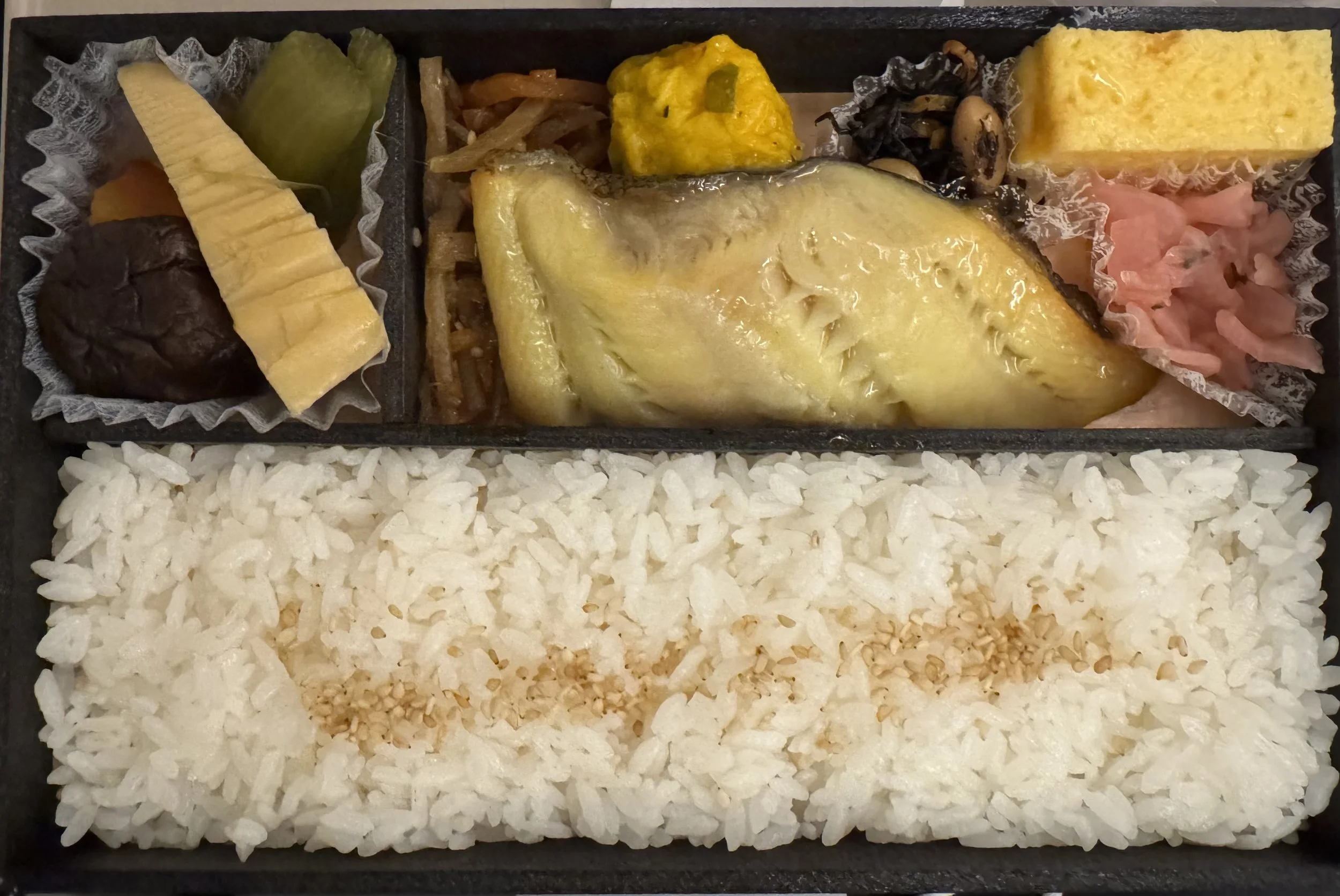
A snack for the journey

About 30 minutes before departure, our train appeared by name and number on the digital board with the platform number. The displays alternate between Roman and Japanese characters so it is easy to find your train’s location.

We had reserved seats, so once on the platform we proceeded to where our specific car would board as each car stops at a specific point on the platform. Even the car doors align perfectly, with marks on the floor so you know exactly where to stand. People line up to board the train in an orderly fashion.  For our first journey, I had booked tickets for the “Green” car, which is kind of like business class. You get a bit more room, handy electric outlets right in the arm rest, and an attendant comes by with a trolley offering food and drinks for purchase if one wishes. It costs a little more but I thought it would be fun to try it especially for what would be one of our longest train journeys.

As we waited, a petit women in a pressed uniform appeared next to us on the platform. We surmised from her outfit and her battery of tools that she would be cleaning the train when it arrived. As the train into the station still traveling at an astonishing speed, she stood facing the train and bowed deeply from her waist to the train as it arrived on the platform.

A moment later she and her crew mates were inside making the inside spic and span for the onboarding passengers. They vacuumed, wiped down all the seats and tray tables., and took away all the trash all in about 6 minutes. With just 3 minutes to departure time, the train began to board. We found our very spacious seats and had barely stowed our luggage when the train glided out of the station without so much as a jolt or a shudder.

The Tokyo metropolitan area is home to more than 40 million people so perhaps that gives you a sense of its massive size. Yet seemingly within minutes, the city gave way to suburbs and then to a more rural setting with small villages and farms. The Shinkansen reaches top speeds of around 300 km/hr (around 190 m/hr). If I understand Einstein correctly, I added at least a few seconds to my life by traveling so fast.

The train ride was as close to silent as a train can be. Phone calls or even phones ringing or making sounds is prohibited in every car. If you must make a call, you are permitted to stand in the space at the end of the car and speak in a whisper. The train itself is smooth and quiet. That leaves just the announcements of upcoming stops (in Japanese, English, and Chinese) to disturb one’s repose. No one asked to see our ticket. Somehow they just know who you are and where you are supposed to be. The conductors move silently through the cars. As the staff goes from one car to another they turn and bow to the car before moving to the next one. It is a way of showing respect for the train, their work, and the passengers.

Around noon, we enjoyed our bentos which were quite ouishi (delicious) and watched as the scenery rolled by at astounding speed. The tracks run right along the coast so the view is enchanting with the sea on one side and snow-capped mountains on the other. I assume many of them are snow covered all year round.
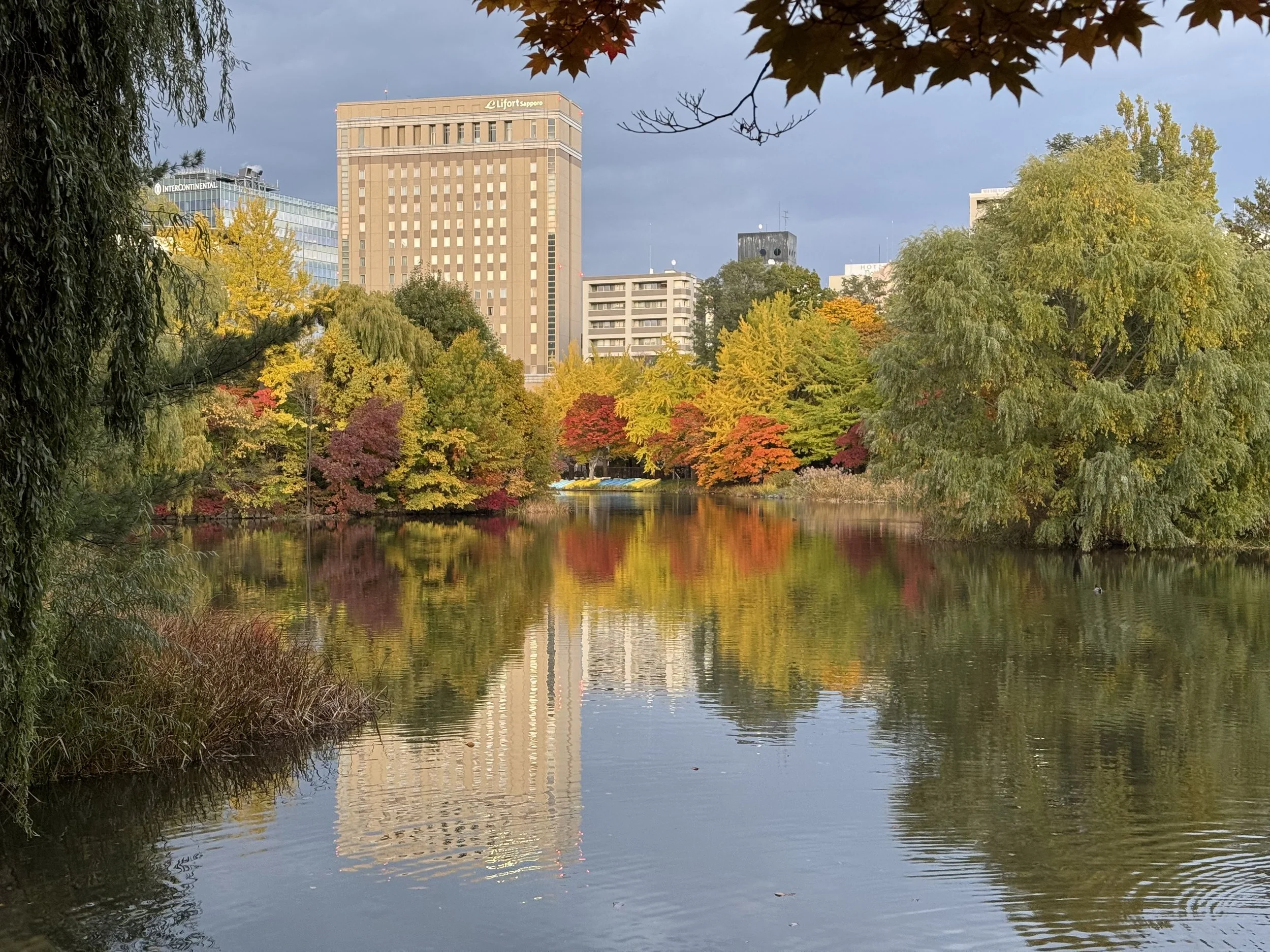
Autumn in Hokkaido — Why does it feel so inviting?

There was intermittent rain and mist and sometimes sun as we rolled through one micro climate after another. Also, though we weren’t really paying attention to it, the outside temperature was plummeting as we barreled north leaving Tokyo’s late summer and heading toward fall in Hokkaido. The trees, which had barely started to change in Tokyo, now began to present yellow, red, and orange adding to the charm and beauty of the passing landscape. Finally we passed through the 56km long tunnel under the sea that separates Hokkaido from Japan’s main Island of Honshu. Passing through the tunnel is the only time on the entire journey I lost mobile service for a few minutes.

At exactly 1:36 p.m. the train pulled into the Shin Hakodate-Hakuto station. We would need to take another local train about 15 minutes to the town center where our hotel was. The weather app reported it was 10 degrees Celsius but felt like 4.
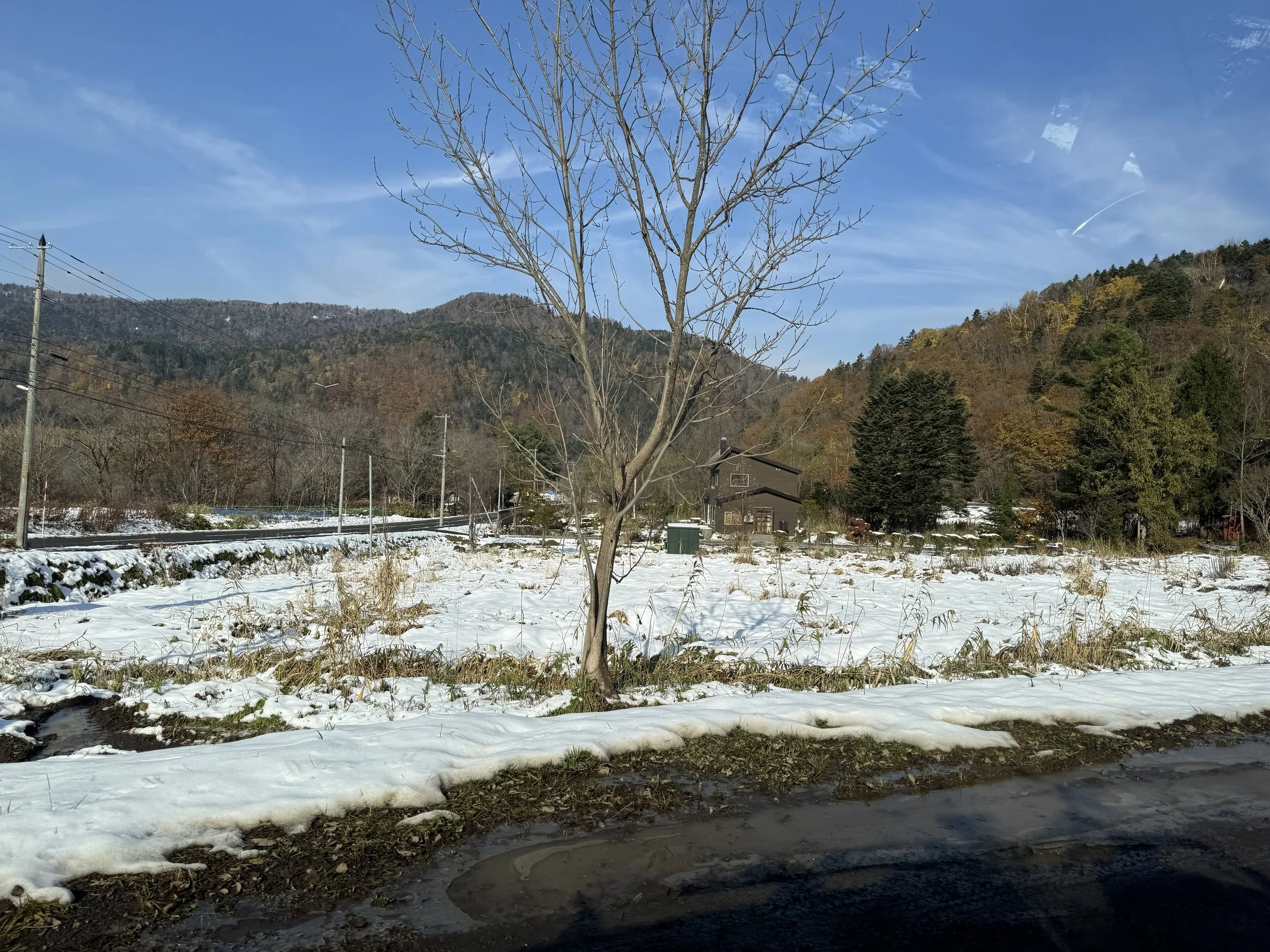
Yes, that is snow on Oct. 30.

A few minutes later we tapped out of the final exit gate with our Apple Watches and stepped out of the warm station into the rain, cold, and gusting winds of a Hokkaido autumn.
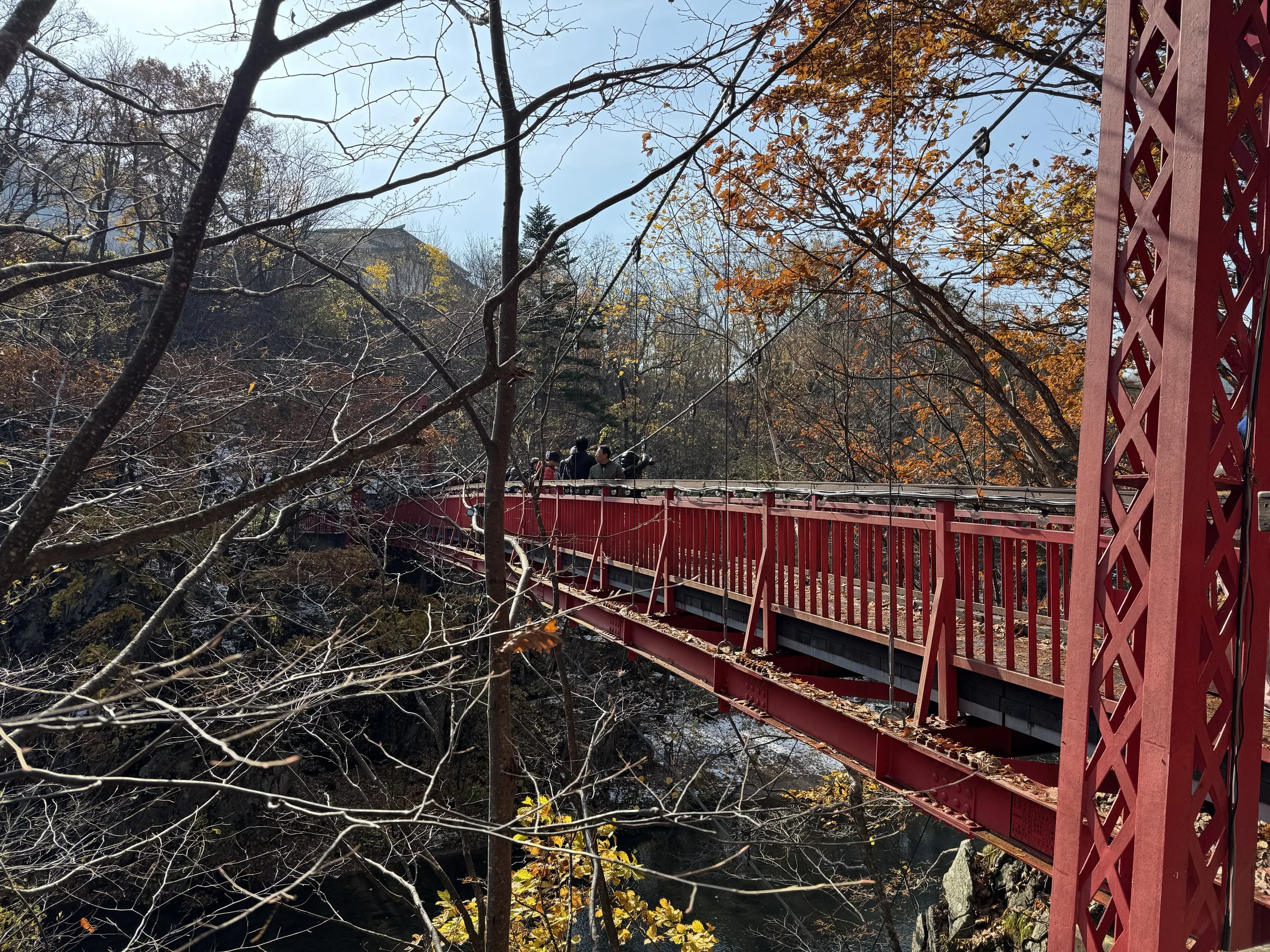
The world’s a narrow bridge; fear nothing.
PostedOctober 31, 2025
AuthorDennis Kirschbaum
5 CommentsPost a comment

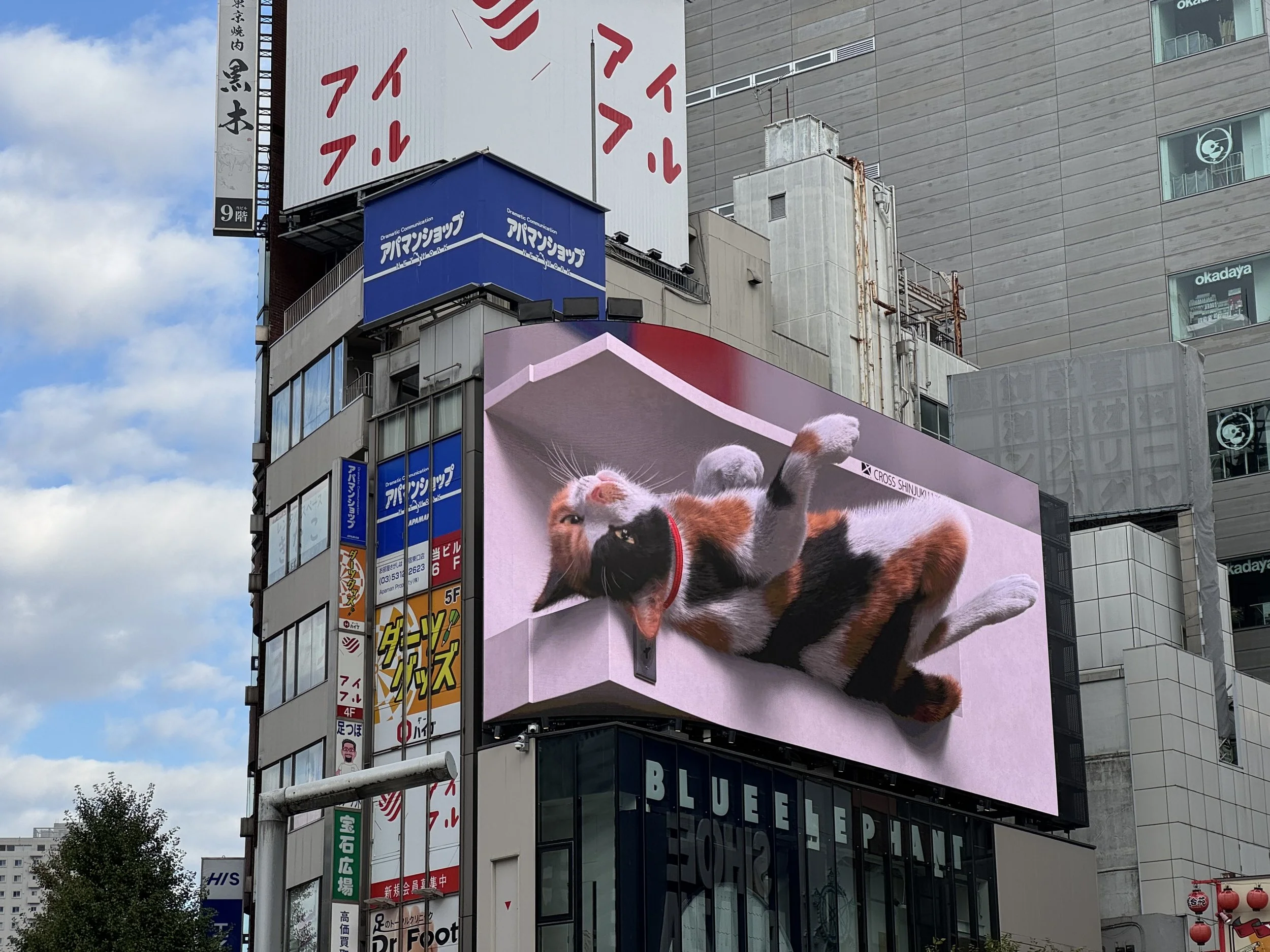
The famous Shinjuku 3D cat looks like he might tumble out of his electronic billboard at any moment and use one of those nine lives. But he never does.

Don Quixote, Godzilla, and Rice Balls: Welcome to Japan!

The act of packing, especially for a trip longer than a day or two, is a study in reducing your material possessions down to their most essential. Most essential means the things you need to keep living and navigate unfamiliar environments with as little stress as possible. If you are a 60+ year-old man living in the 21st Century, this means, your luggage will be filled with more medications and technology than clothes. There is no room for the sentimental or the ornamental. Every included item must be evaluated strictly for utility and ideally each serves more than one purpose.

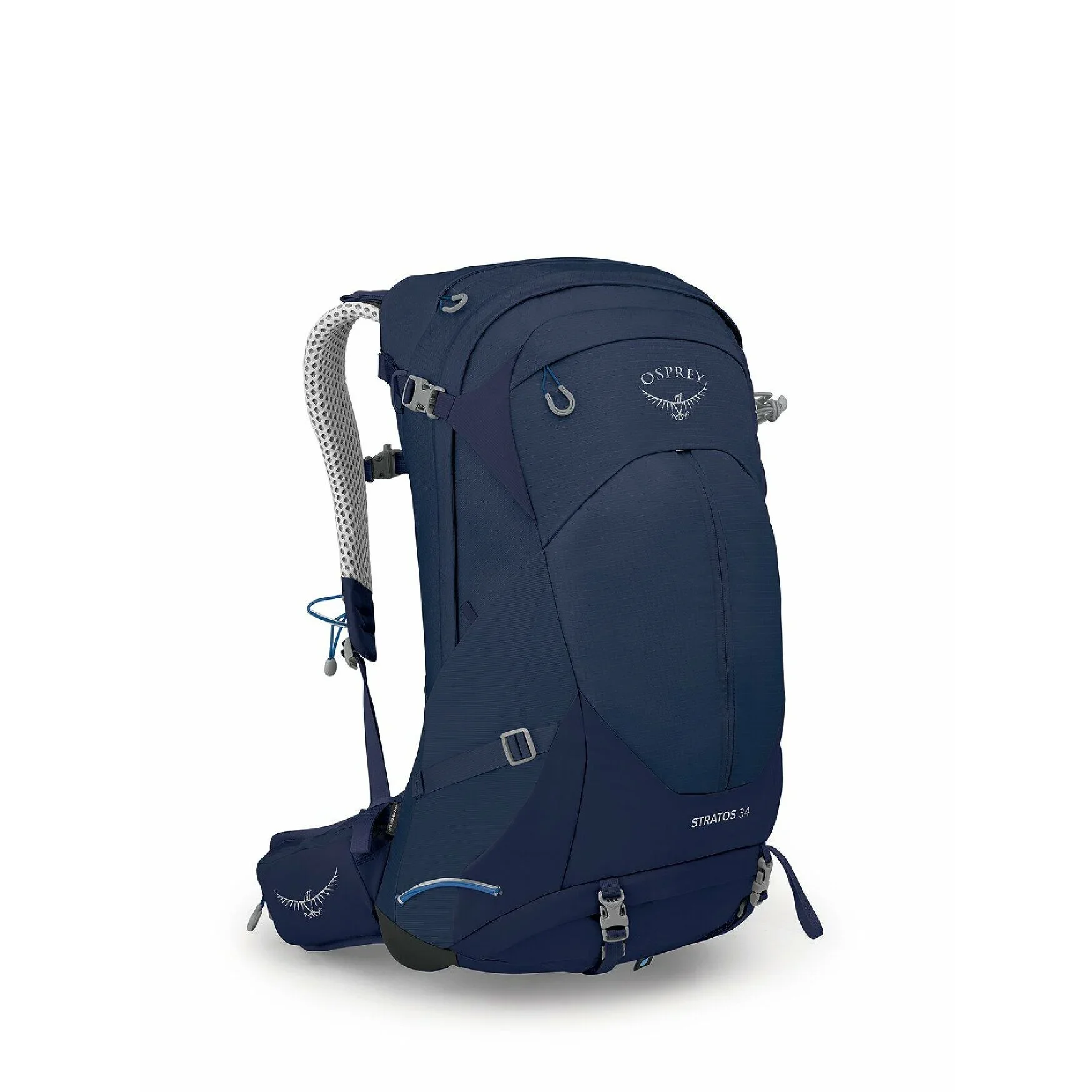
My goal was to fit all my belongings into my Osprey Stratos pack with a volume of 34 liters and a small carry on sized sling bag and, when I learned of the max weight limit combined for all carry-on items of 10 Kilograms, to get under that mark. This Stratos is the pack that I use when I go on a day hike. It has a main compartment. Another small one at the bottom that might fit a pair of shoes or a small sleeping bag and it has two pockets at the top that can hold a few granola bars. I wanted to bring this pack because it is so comfortable. I have worn it for ten hour days in the Adirondacks. But it is small for a long trip.

The Osprey Stratos 34. Enough space for a day hike in the woods or multi-week journeys in foreign lands. Fits in overhead compartments. Great hip belt!

After figuring out “the pouches” tech, admin (passport, notebook, etc.), and toiletries, there was a small space left for clothes. I wore my main shoes (Keen hiking shoes) and had enough room for a second pair in the bottom compartment. I had to choose between Crocs to wear around the hotel room or running shoes and I (optimistically) chose the latter. For clothes, I replaced all my cotton t-shirts with light nylon ones. I brought four of these and two thin nylon long sleeve hiking shirts. Also two pairs of hiking pants, two pairs of gym shorts and a reasonable amount of socks and underwear. Also a pair of knit gloves and a ski hat. The articles that had to fit in the bag were less since I would wear some of it. All the remaining clothes fit in a medium packing cube which fit nicely in the space that was left in the bag. I would also wear a fleece sweater and over it a rain jacket. Japan can be cold in the fall; snow is not out of the question. Since I didn’t want to bring a big jacket or coat, the ability to layer would be key. Most hotels in Japan have laundry rooms and we figured we’d need to do laundry about once a week.

On the morning of departure, all my belongings weighed in at exactly 10Kg (22 pounds) but that included my wallet and tech pouch, which when removed and placed in the pockets of my fleece, got me down to about 9.5 kg. Well under the limit for carry-on.

In the end, I checked my backpack. My wife needed to check hers so we’d have to wait for luggage anyway, plus it made the three hours we had to wander around the airport more enjoyable.

One of the uncharacteristic splurges of my old age has been to get a credit card that carries an annual fee, which offers a perk of free access to airport lounges. There were multiple choices in our airport, but the closest lounge to our gate was the Turkish Airlines lounge, which offered up a delightful breakfast of olives, boiled eggs, breads, cheeses, and an endless supply of any kind of coffee you’d like. Hidden away in a corner was a bar that offered free cocktails, but at 9:00 am, we passed on that. We hung out in the lounge for about two hours and then spent the remaining time walking around the airport until it was time to board.

A flight from DC to Tokyo is long. There is no way around that. Having said that, the Economy seats were comfortable enough. The veggie meal I requested was inoffensive but the flight being mostly daytime, I slept very little. I did drift off the last hour or so before landing and awoke groggy and in desperate need of caffeine, which the flight attendants provided from a large pitcher. It wasn’t bad coffee, truth be told.

As soon as we landed and turned off airplane mode on our phones, the eSIMs that we had purchased from Holafly came to life and connected to the cell network. Instant unlimited internet access! No phone service however. Japan bans foreign visitors from getting a working phone number. I suspect that they don’t want Americans having loud conversations on the subway and other public places. Japan, even in a huge city like Tokyo, is a very quiet place. Conversations on the metro happen in a whisper if they happen at all.

Thanks to our advance prep, we were through the airport in no time. I had completed an online arrival form and had received a QR code. You scan the code once at passport control and a second time at customs and, Konichiwa! Welcome to Japan!

The line for ATM was long but we had the equivalent of about $15 in yen our neighbors Kitty and Mark had left over from a previous trip and kindly gave us. We figured that and our pre-loaded Suica transit cards would get us to the hotel.

The light rail station is right inside the terminal and again our advanced planning paid off. No need to buy tickets or passes. We just tapped our Apple Watches to the gate, a cheery sound indicated our Suica Cards had been accepted, and we were riding Tokyo mass transit. We hit the metro just as rush hour was starting so the trains were quite full but not packed.

Apple Maps guided us through the subway and there was just one point at the transfer where we struggled to find the correct train but that was only a minute or two. The final train injected us into the night in the district of Kinshicho, where all that remained was to walk the 400 meters to our hotel. Total cost of transportation from the airport to the hotel was about 500 yen ($3.50)  per person. 

After checking in it was about 6 pm on Thursday night. We were tempted to go straight to bed but I was also hungry and anxious to get a taste of Tokyo. I had seen many videos on the wonders of the Japanese convenience store and we had passed a 7-Eleven right outside the Subway station. So I headed back there for some snacks while Barbara got cleaned up.

The Japanese convenience store is a wonder. It’s somewhat like a Pilot or Love’s gas station on an American Superhighway. But the food is much better.

I picked up some tuna and egg salad sandwiches and some rice balls filled with salmon and salmon roe. The rice balls are wrapped in nori (seaweed) so one might imageine one is eating a big sushi ball with the fish on the inside. They are tasty and very cheap at around $2.00 each. Two of them are a very filling meal. I also bought two small ice creams in cups that had hard caramel on top like a frozen Crème Brulee. I paid for everything with my Suica card by tapping my Apple Watch and walked back to the hotel.

When I got back, I found that Barb wasn’t hungry at all so I saved her sandwiches but had to take a hit for the team and eat both ice creams since they would have otherwise melted. The leftover sandwiches held up overnight and I had a tuna sandwich for breakfast the next day. For whatever reason, tuna didn’t appeal to Barb for breakfast.

Jetlag had us up at 4:30 am so Barbara jumped on the internet and found us a walking tour of the Shinjuku district meeting up at 8:45 am. Navigating the subway flawlessly, we got there an hour early and spent the time walking around and gawking at the 3D digital cat billboard until it was time to meet up with our guide, Mao. There were just 3 other people of the tour – a husband and wife and their friend, all from the Bahamas. Jim worked for Honda and was in Japan for a business trip. Our small talk centered around Japanese cars and how great they were. We praised our 2017 Civic with its manual transmission (stick shift) still going strong.

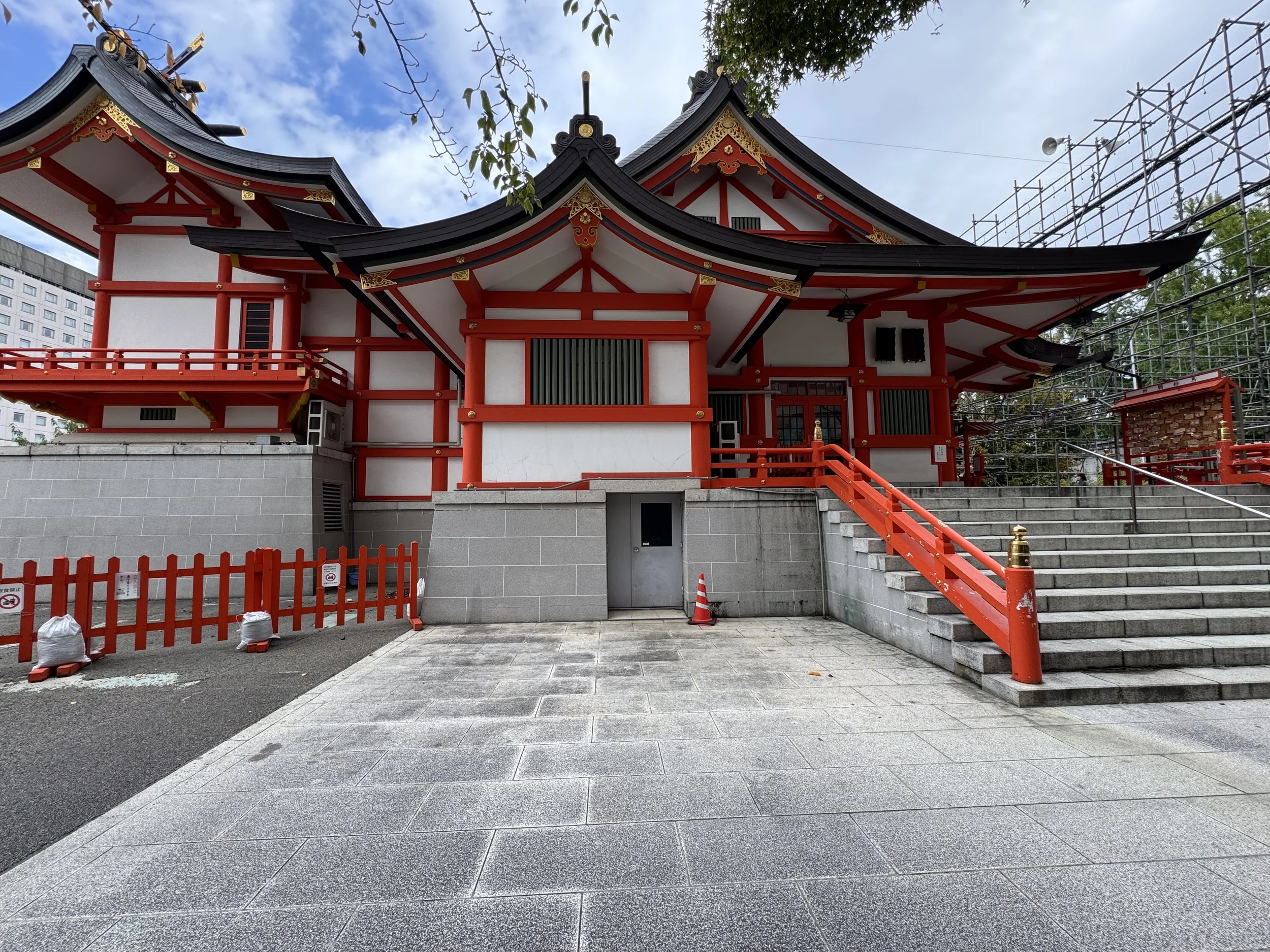
Temples and shines appear in the most unexpected places. This one is just steps from an area known for bars and night life.

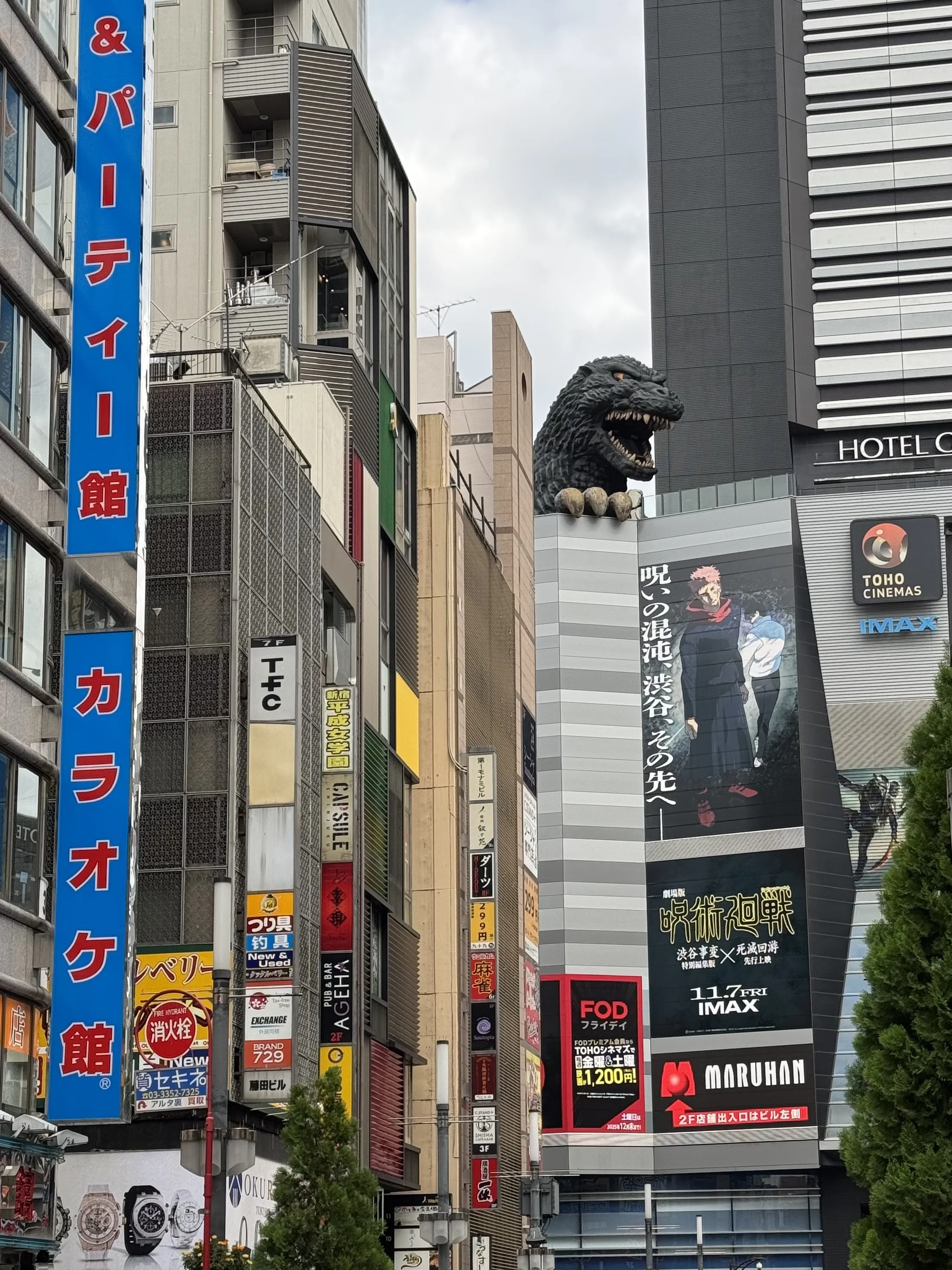
Mao gave us a wonderful tour which included the “red light” district, the Golden Gai area with hundreds of tiny themed bars crammed into four square blocks, and an elevator ride to the top of a tower with a great view of the district and beyond. We ended at a beautiful white shrine with bright red trim where one can make wishes which might come true depending on how the god is feeling disposed toward you that day. You can also make a donation, which may help with the god’s disposition. We also spotted Godzilla (no relation to the gods) peeking over a skyscraper.

This guy.

Following the tour, we began walking the 4 km to the famous Shibuya district which is kind of the Times Square of Tokyo. As we set out, a light rain began falling. Along the way, we stopped at a Ramen shop to sample the vegetarian ramen. There was a long line to get in but it moved quickly. Once inside, you take your turn at the ordering machine where you pick what you want and pay. The machine spits out a little slip of paper for each thing you ordered. We got three slips. Two bowls of soup and a beer. The counter only seated about 15 people, but space soon opened up and we sat down and presented our tickets. Soon two large and steaming bowls of ramen appeared with noodles, broth, radish, asparagus and other vegetables. Sadly, we didn’t get an egg as that didn’t come with the vegan soup.

The soup was delicious and had a rich flavor in spite of being vegan.

As we approached Shibuya we found ourselves in front of the mega store inexplicably called “Don Quixote.” A massive department store with at least 5 floors, DQ sells everything from clothes to food. There are no windmills, however. We picked up an umbrella and a small bottle of Japanese whisky to try later.

Shibuya Crossing (photo nicked from the web).

The district was crowded and full of tourists. We checked out the famous “crossing” but soon decided that the whole scene was not our jam and headed back to our hotel for a break and to dry off.

So far, Barbara has not been excited by Japanese food so it made sense to have dinner at a Indian restaurant right in our neighborhood. However, when we got there, it was closed . Instead, we settled on Italian with some unremarkable but not terrible pizza. There were exactly two vegetarian choices. We got both. Our hotel had given us two complimentary drink tickets when we checked in the prior day so we each had a glass of wine in the lobby before calling it a day at around 7 pm.

We started to watch a Japanese movie but with Jet lag still in full force, neither of us could keep our eyes open. By 8 pm we were tucked in and fast asleep. No crazy Tokyo nightlife for us — at least not yet.

There was morning and there was evening, a first day.

The world’s a narrow bridge; fear nothing.
PostedOctober 27, 2025
AuthorDennis Kirschbaum
4 CommentsPost a comment

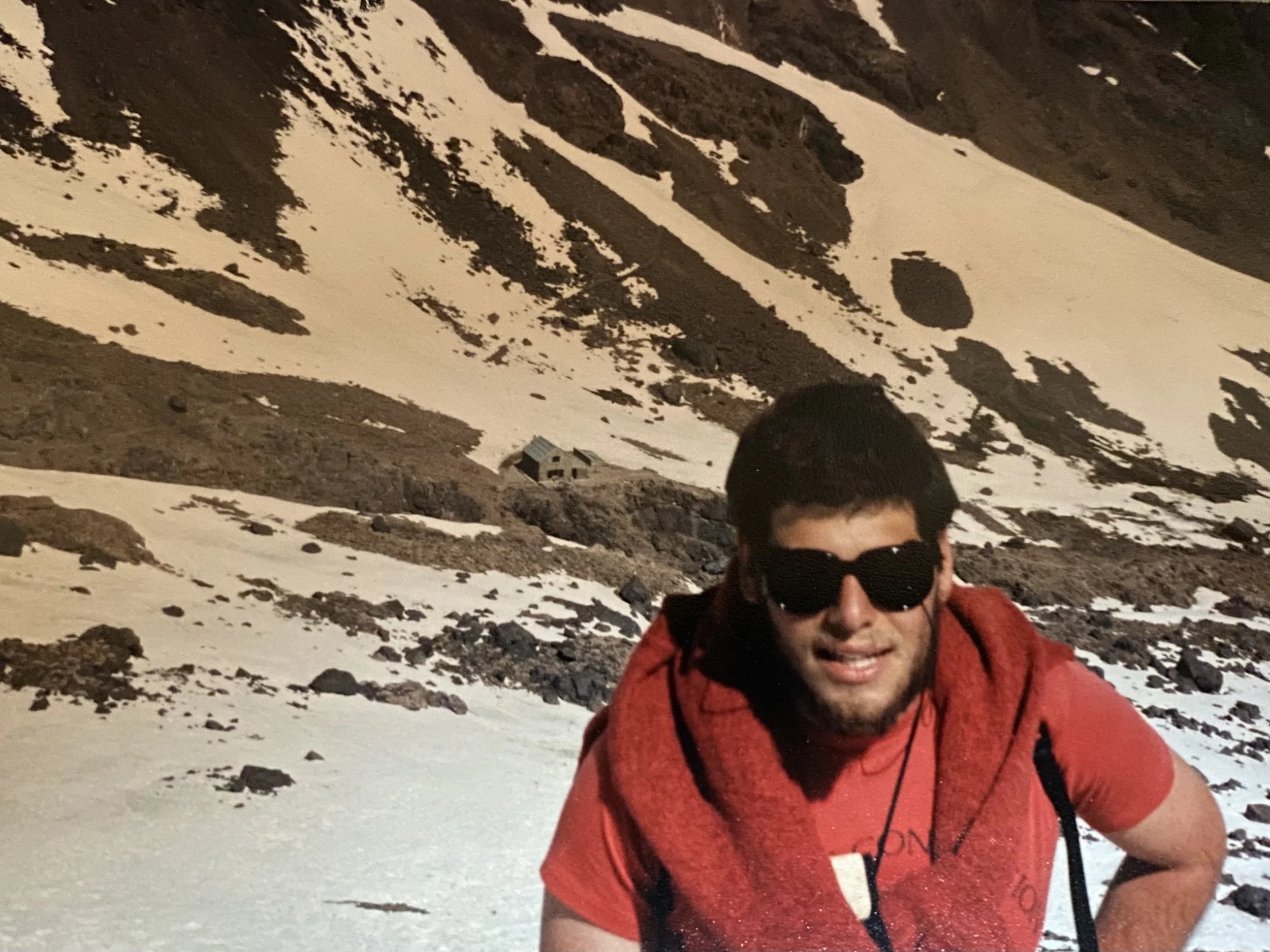
Climbing Mt. Toubkal, Morocco, April 1986. The altitude sickness is just a distant memory now. (and yes, I still have that sweater. Sadly the Coffee Connection t-shirt has long since disintegrated.)

Baggage Check

Yesterday, as I was beginning my walk, I spotted my neighbor, Jim. Jim retired last year at the age of 80 with some trepidation. He was worried about what he would do with himself and all the free time. I never faced any such concerns when I retired, or at any time since, but I understand that many people do. I hadn’t spoken to Jim in a while and as almost a year had gone by I asked him how he was settling into retirement. Had he found an ideal and enjoyable way to use his days? He admitted to me that he hadn’t quite figured it out yet but he had identified some things he didn’t like to do. He realized he hated traveling.

As you may recall from my post last week, I am in the midst of preparing for a trip to Japan and as he said that I realized in that moment that I hate traveling too! And yes, I have done quite a bit of it. I have been to every state in the U.S. I have traveled through Europe and the U.K. I spent three months on the Indian subcontinent moving about by steam engine train. And, of course, I have been to Israel 17 times most of which were on trips with 40 college students in various states of intoxication. So I can understand why you might be skeptical of my claim.

I have joked that my two favorite parts of traveling are packing to go on the trip and unpacking again at home. There is some truth in that. Anticipating and preparing for a trip is fun. You get to figure out what to bring. Maybe you need to buy some new, fun stuff. Then there is the jigsaw puzzle of how it will all fit in the smallest possible bag.

Coming home too, there is the joy of getting everything clean again and organized and put away and, of course finally sleeping in one’s own bed.

But in between? Stress and discomfort. There are long plane rides to be endured (14 hours to Tokyo!). There are unfamiliar roads to navigate. Often (in the places we go) large, hungry mosquitos, moose, and the occasional bear. Sometimes there is no Apple Store for 1,000 kilometers.

Abroad there are people who don’t speak English, revolting, non-kosher foods, and no end of strange pillows, beds, and the dreaded public restroom. Not to mention, civil war, violence, tropical diseases, and foreign currency conversion calculations.

Why go through this?

I started running again about a month ago after having stopped back in 2020 during Covid. I started slowly. The first day I ran 500 meters. Then a kilometer. Now I am up to just over 6 km 3 times per week. I’m not sure why I stopped in 2020 . Nor am I sure what made me start up again. Truth be told, I don’t love running. I rather not, in fact.  But here’s what motivates me to do it:

  • I think it’s good for me.

  • It makes me feel stronger and more resilient.

  • I always feel better for having done it.

The same, I believe, is true for traveling.

I think it’s good for me.

Traveling requires that you change your perspective on things and on yourself. You do things you weren’t sure you were capable of. You are forced to try new things whether you want to or not. You are asked to confront your deepest held beliefs and prejudices. Away from most friends, family, and the familiar rhythms there is an opportunity to step outside one’s identity to reimagine who you are or could be.

It makes me feel stronger and more resilient.

The more something scares you, the more you don’t want to do something, the more important it is that you do it. Remembering back to the 15 years or so that I rode a motorcycle, I recall that every time I started up the engine I’d wonder, “Will this be the day I get hit by a car and die?” I had more than one close encounter with a vehicle over those years. Each one scared the hell out of me. Yet, I knew that I couldn’t quit riding just because I was scared. Quite the opposite. I needed to do it because I was scared.

At the end of my semester in Germany in 1980 when I was 19 years old, I hitchhiked alone from  Munich to and through Yugoslavia. It was December and cold, I had very little money. At one point I got picked up by the police. I ended up stranded at the end of a day wet and hungry in Zagreb where I made my way to a train station and booked a fare I could ill afford to Florence to meet up with my roommate. I waited for the train for hours on the freezing platform talking to some dude who was friendly enough once he realized I wasn’t German. The train was crowded but warm as it crept slowly toward Italy through the long night. I was incredibly grateful to be on that train.

Perhaps I don’t need to explain why my memory of that adventure is only positive. It is at times of maximum stress that you glimpse what you are made of.

Sometimes the way is rocky and steep. Other times it’s just mud as far as the eye can see. Adirondacks, August 2009.

I always feel better for having done it.

It’s not that you don’t remember the discomfort of travel, it’s that the memory of the discomfort fades while the positive experiences glow brighter over time. Sure, I remember the time the train broke down leaving us stranded in the middle of Uganda for a day and a half. Yes, there was the time we journeyed 48 hours from Madras to Delhi while I was in the throes of, lets just call it, deep digestive distress. But looking back, these just don’t seem so bad, while standing at the top of Mt. Kenya or watching hippos illuminated by lightening ripping the tall grass from the ground right outside the tent feel among the most significant experiences of my life.

In terms of discomfort, I know pretty much what to expect on our upcoming trip. An interminable plane ride (in economy), many nights of poor sleep, being cold or wet or hungry or tired (or some combination of all four). And many, many moments of feeling disoriented, embarrassed, and lost. Experiencing these are valuable in themselves and actually enough to make the trip worthwhile.

But with luck there may also be moments of delight, clarity, awe, and insight into the human condition or at least the condition of this particular human.

So yes, there is the part of me that would just as soon stay home. Here I sleep in my own bed, eat the food I am used to, dwell in the English language as a fish swims in water —without thinking about it. Not to mention the money that wouldn’t have to be spent. But there is another part that insists that the hard things, the scary things are what give texture, dare I say meaning, to life. That part tells the part that wants to stay home to shut the hell up and get on the bus.

Barbara and I embark on this trip both having had significant health challenges in the last two years. It is also our first trip aboard since Covid (not counting a Canada transit or lunch in Mexico last March in Big Bend National Park) so folded into a batter of apprehension is a heaping helping of gratitude that we are able to do it. At the age of 64, I can still toss a pack over my shoulder just as I did when I was 19, albeit with a higher probability of lower back strain.

As I cram my backpack with the things I imagine I can’t survive without, I can’t help but look forward to the day I unpack them again. In between those two dates lies a peregrination not always salubrious, but with the potential to kindle wonder and create memories to be recalled with pleasure —  at least once I am home.

The world’s a narrow bridge; fear nothing.
PostedOctober 9, 2025
AuthorDennis Kirschbaum
2 CommentsPost a comment
Newer / Older

© Dennis M. Kirschbaum. All rights reserved worldwide. Full notice.